The surgical headlamp that knows where the surgeon is looking — a two-minute read.
The evidence
The evidence
87%
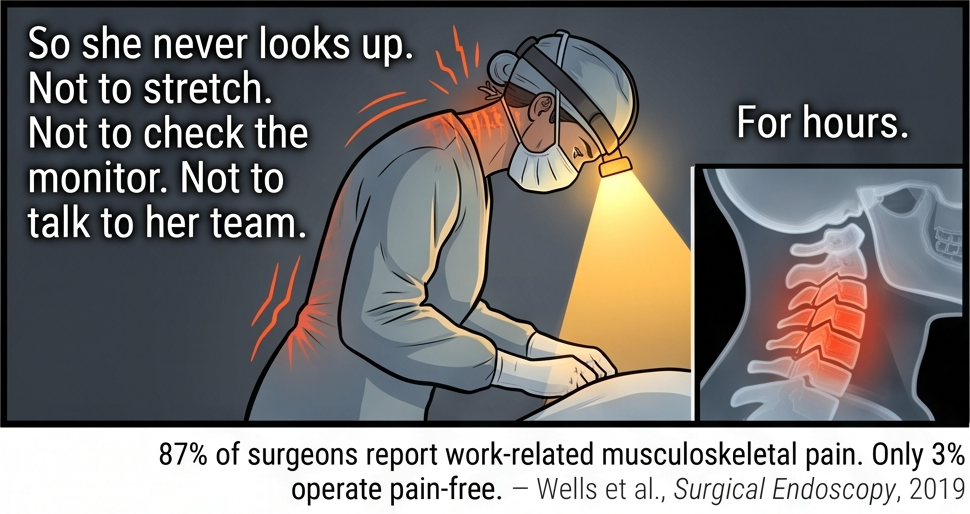
87% of surgeons report work-related musculoskeletal pain. Only 3% operate pain-free.
— Wells et al., Surgical Endoscopy, 2019 (survey of 556 surgeons)
49%
49% fear their pain will end their ability to operate. Those surgeons report significantly higher burnout (p=0.005).
— Wells et al., Surgical Endoscopy, 2019
~40%
Loupes and headlamps increase cervical spine loading by roughly 40%.
— Nimbarte et al., IISE Transactions on Occupational Ergonomics and Human Factors, 2013
10%
Nearly 10% of cervical injuries in surgeons end careers outright.
— Sivak-Callcott, Mancinelli & Nimbarte, Current Opinion in Ophthalmology, 2015
68%
68% of frequent surgical headgear users report worsening neck symptoms since residency, versus 38% of infrequent users. 34% are diagnosed with degenerative cervical disorder.
— Sahni et al., Journal of Spine, 2015
The technology
The technology
-
U.S. Patent 11,229,096
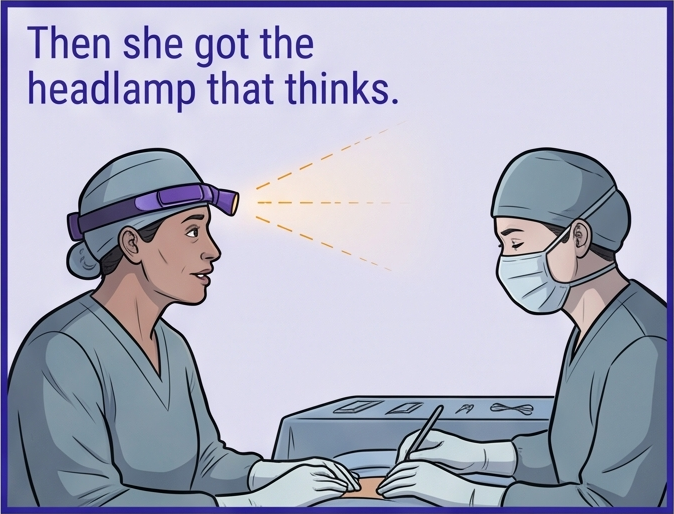
“Smart headlamp system.” Issued January 18, 2022. Automatic light modulation based on head orientation, using inertial measurement and Hall-effect angle sensing.
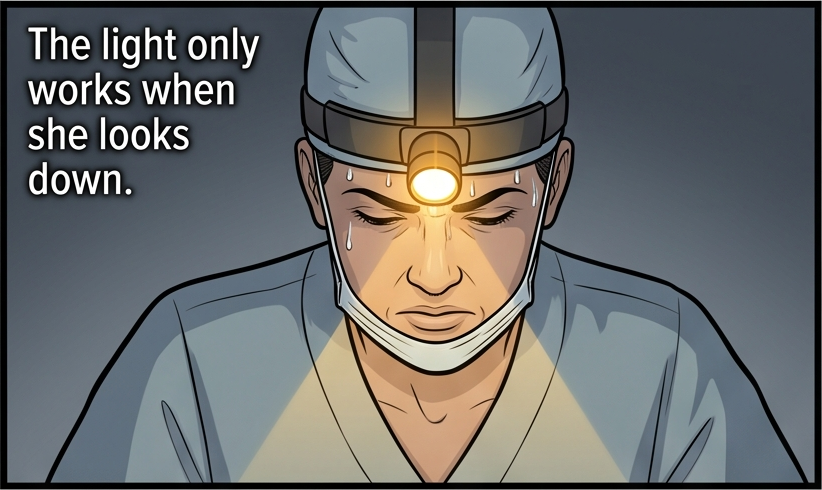
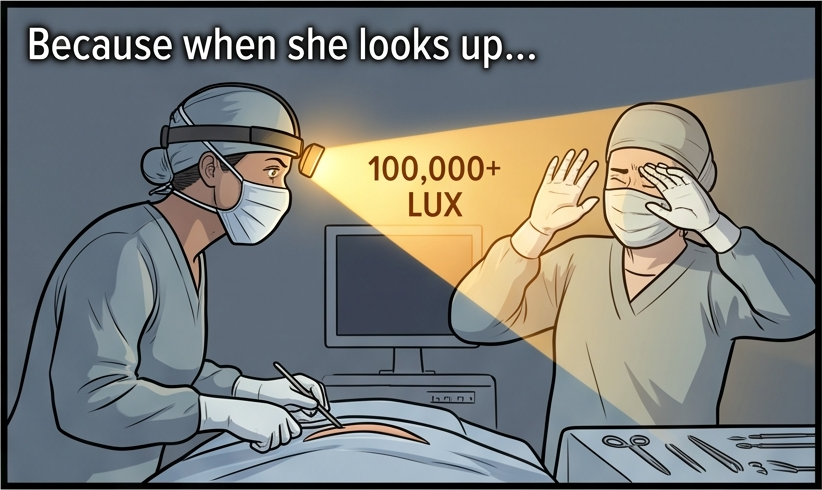
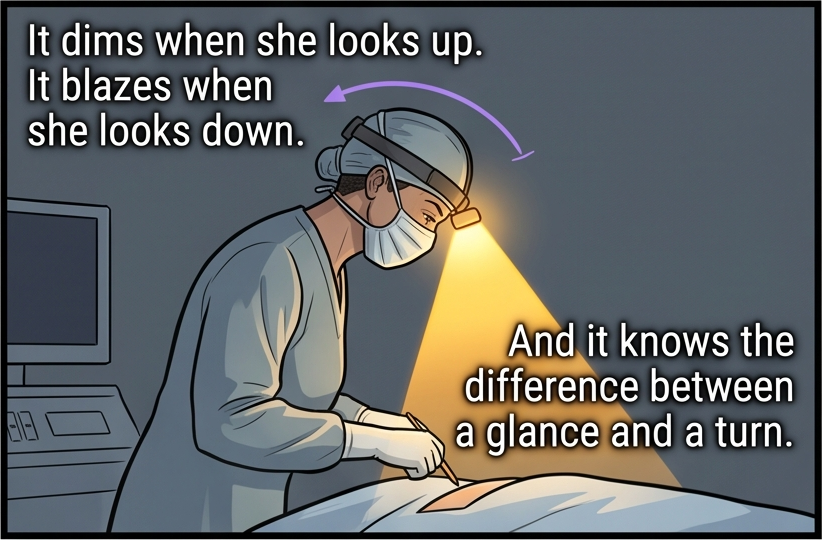
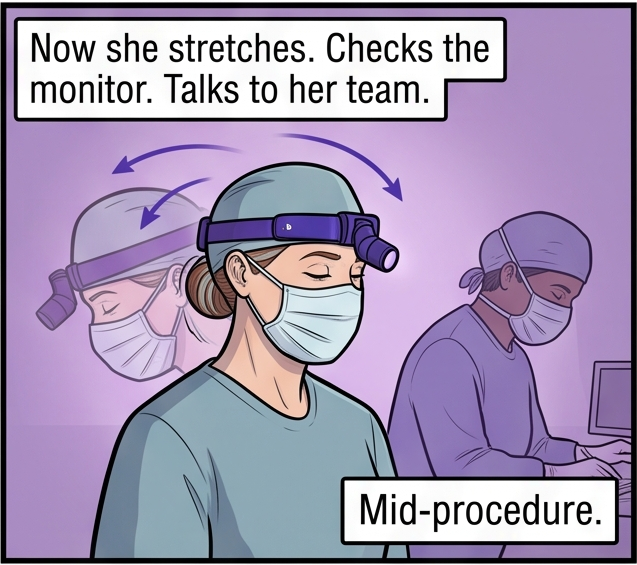
The lamp dims when the surgeon lifts their head and returns to full output on the surgical field. Hysteresis in the threshold logic distinguishes a deliberate turn from an incidental glance — no flicker, no hunting at the boundary.
- Integrates with standard ICs from multiple vendors.
- 20–30mm² PCBA footprint.
- No industrial redesign required.
- Class I medical device under 21 CFR 886.4335 — exempt from 510(k) premarket notification.
The ask
Fifteen minutes. Bring your optics lead.
Integration economics and the revenue model are shared directly — not on a public page.